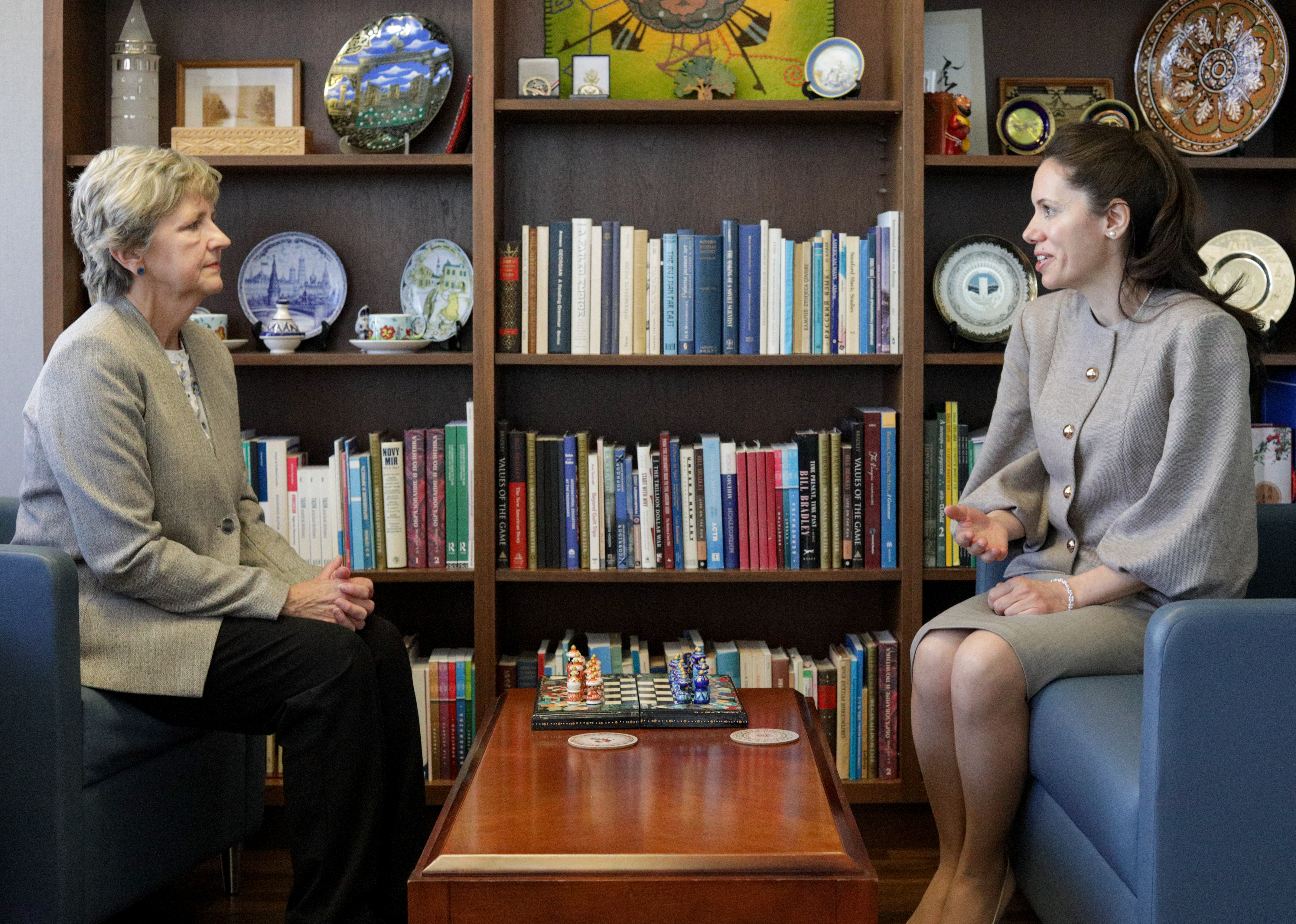
WASHINGTON, DC — First Lady Mirabela Grădinaru of Romania visited American Councils for International Education on March 24 as part of her official engagements in the United States capital. The visit focused on expanding cooperation between American Councils and Romania across a range of educational and exchange initiatives, including the Future Leaders Exchange (FLEX) Program and other academic, professional, and leadership programs supported by the Bureau of Educational and Cultural Affairs of the U.S. Department of State, the Congressional Office for International Leadership (COIL), and the Government of Romania.
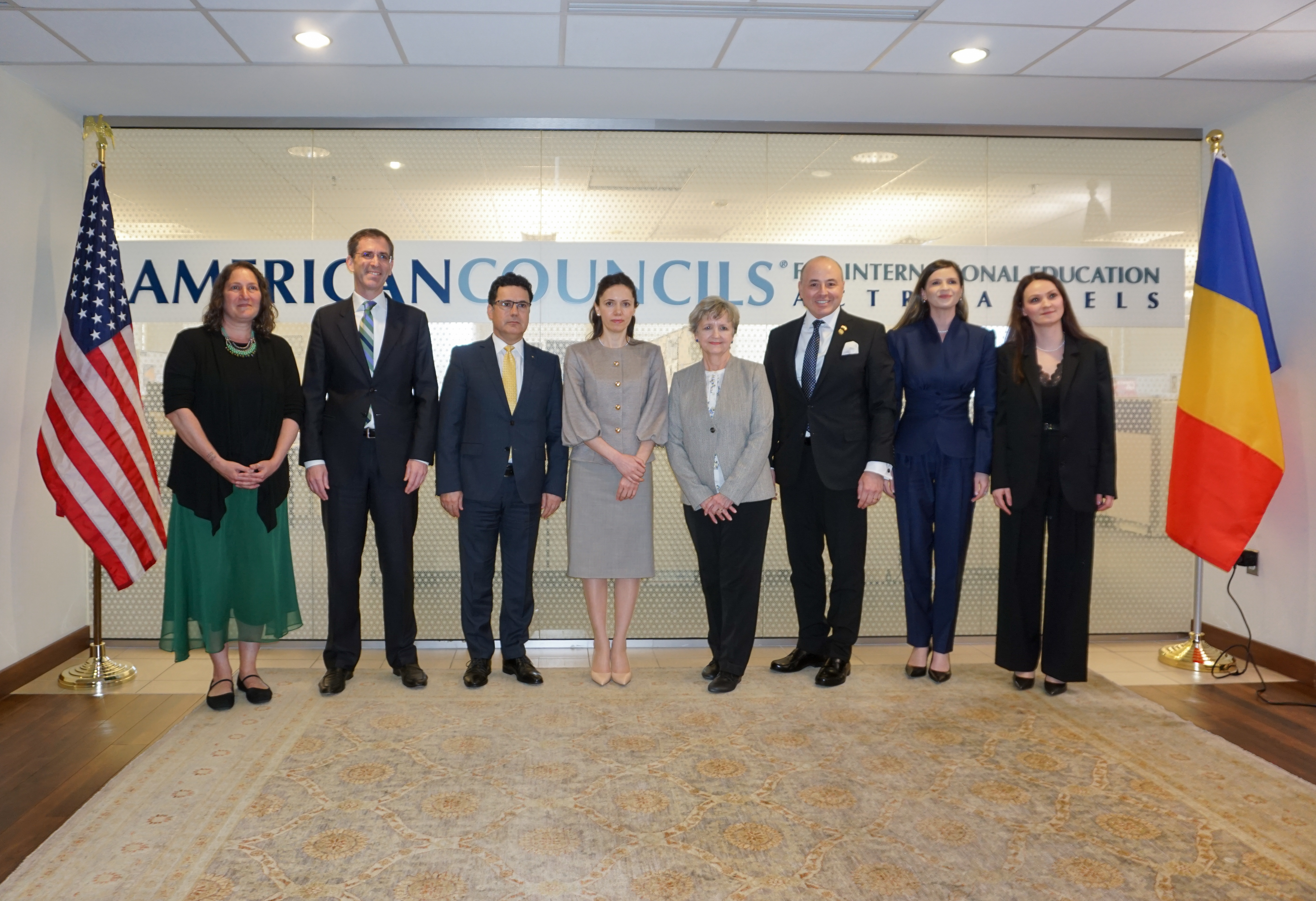
First Lady Grădinaru was received by American Councils President and CEO Lisa Choate, Chief Strategy Officer Carter Johnson, and Senior Director of FLEX Valerie Frank. The First Lady’s delegation included Ambassador Andrei Muraru, Rector Remus Pricopie, and presidential advisers Diana Punga and Ana-Maria Geană.
"Romania is one of America’s most consequential allies in Europe, and the people who will define that alliance’s future are in high school today. FLEX invests in those future leaders—the diplomats, military officers, and policymakers who will make decisions that matter for American security. Romania’s decision to co-fund this program is a signal to Washington that Bucharest takes that investment seriously, and American Councils is proud to be the implementing partner, helping build that future today. We were equally encouraged by today's conversation about where we can go next—and we look forward to exploring new areas of collaboration on the issues that matter most to both our countries."
— Lisa Choate, President and CEO, American Councils for International Education
Nearly 2,900 Romanian high school students applied to participate in the upcoming FLEX academic year in the United States, making it one of the most competitive high school exchange programs in the world. Applications arrived from all 42 counties of Romania, with more than 1,000 submitted from towns with fewer than 50,000 residents, demonstrating the program’s reach well beyond major urban centers. Now in its 11th year in Romania, FLEX has attracted more than 21,000 applicants in total, and approximately 300 Romanian students have had the opportunity to spend an academic year studying in U.S. high schools and living with American host families.
Since 2024, the exchange has run in both directions: Through the FLEX Abroad initiative, American students can now study in Romanian public high schools, strengthening the bilateral relationship at the grassroots level and expanding the network of Americans with direct, personal knowledge of Romania.
"Romania's partnership with the United States is not rhetoric—it is built on trust, and trust is built on people. Every FLEX alumnus who goes on to serve in government, in the military, or in public life carries with them a knowledge of America that cannot be learned from a textbook. That is a strategic asset for both of our countries, and Romania's co-investment in this program reflects exactly that conviction. We are not just funding an exchange—we are investing in the future of the alliance. I am grateful to American Councils for the dedication and professionalism with which they have built and sustained this program in Romania, and I was encouraged today by their openness to work with us on the challenges that matter most to Romanian families right now, including protecting our young people from the dangers of technology addiction. That conversation has only just begun."
— Mirabela Grădinaru, First Lady of Romania
After the meeting’s conclusion, the First Lady observed a dynamic international diplomacy simulation conducted by over 100 high school students from around the world as part of the U.S. Government-funded Kennedy-Lugar Youth Exchange and Study (YES) Program. 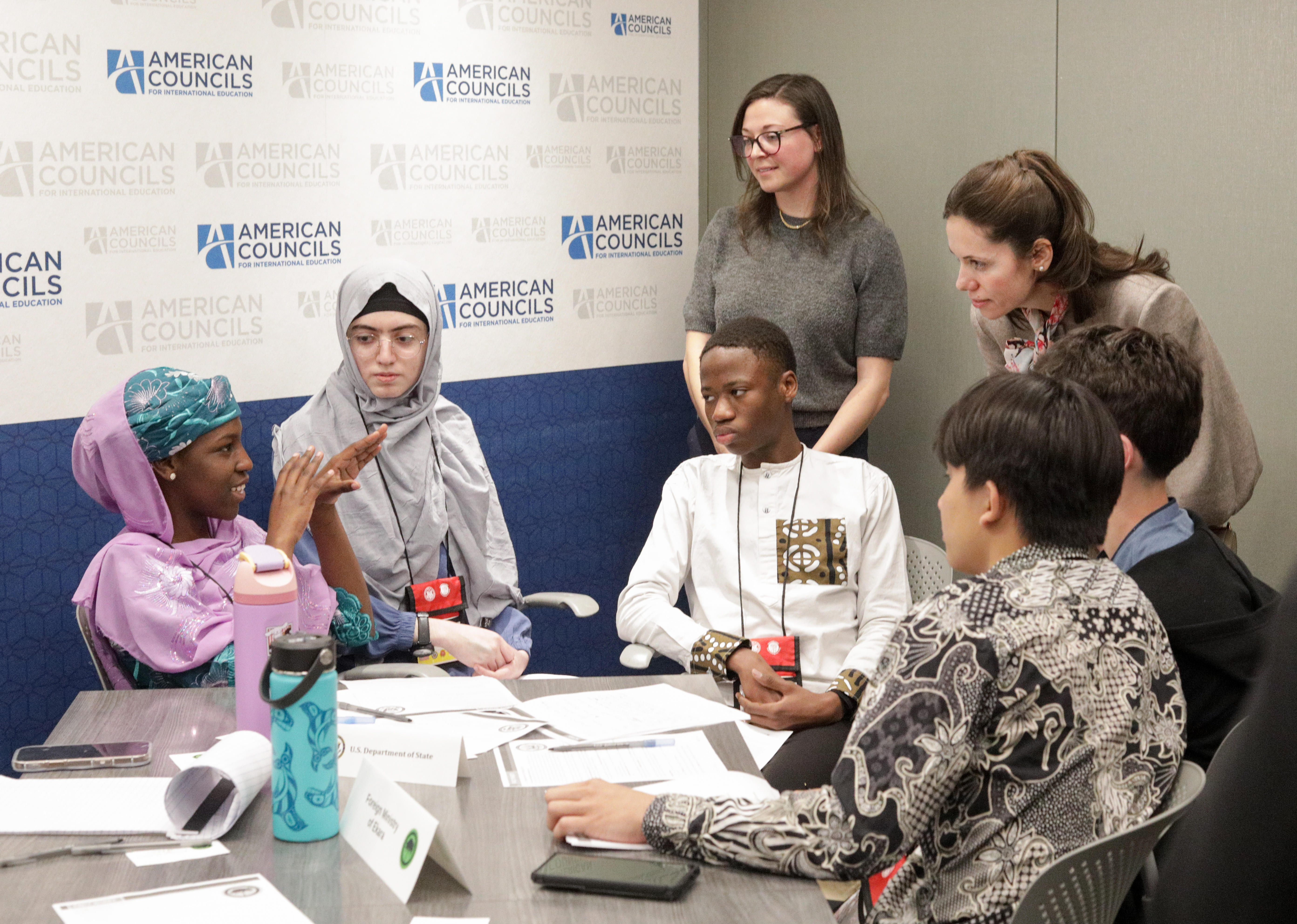
Building on existing areas of cooperation, American Councils and the Romanian delegation agreed to explore using established exchange mechanisms to facilitate sustained, expert-level engagement between American and Romanian specialists working at the intersection of youth well-being, technology, and education—areas that sit at the heart of both countries' shared agenda.
The FLEX program is just one dimension of a broader American Councils presence in Romania. The American Councils Romania office implements COIL's Open World Program, which brings emerging Romanian civic and professional leaders to the United States for short-term exchanges with their American counterparts. The office has also administered the U.S. Embassy Bucharest-funded Elie Wiesel Holocaust Memorial Study Tour program, which takes Romanian students and educators to Holocaust memorial sites to advance historical awareness. Additionally, American Councils supports alumni of U.S. Government exchange programs who are giving back to their communities in Romania through structured volunteer roles, extending the impact of U.S. investment long after participants return home.
Taken together, these programs represent a sustained, multidimensional U.S. commitment to Romania’s civic development, its integration into the transatlantic community, and the deepening of a bilateral relationship grounded in shared commitments to fundamental freedoms and common security interests.
First Lady Grădinaru’s visit to American Councils is part of a broader Washington itinerary that includes participation in the inaugural summit of the Fostering the Future Together coalition, launched by First Lady Melania Trump at the 80th United Nations General Assembly in September 2025. The coalition brings together first spouses committed to advancing children’s well-being through education, innovation, and technology in the digital era. A working session at the U.S. Department of State on March 24 is followed by a high-level roundtable at the White House on March 25. Romania’s participation in the coalition reflects Bucharest’s standing as a close and trusted partner of the United States and is consistent with the First Lady’s emphasis on youth and education as pillars of her public agenda.
About American Councils for International Education
American Councils for International Education is a nonprofit organization operating in 146 countries. For more than five decades, American Councils has connected the United States with partners around the world, expanding educational opportunities, supporting academic research, and building relationships that underpin American diplomacy and shared security interests.
Media Contact:
Meredith Radel
mradel@americancouncils.org
(202) 249-6031 x6069