
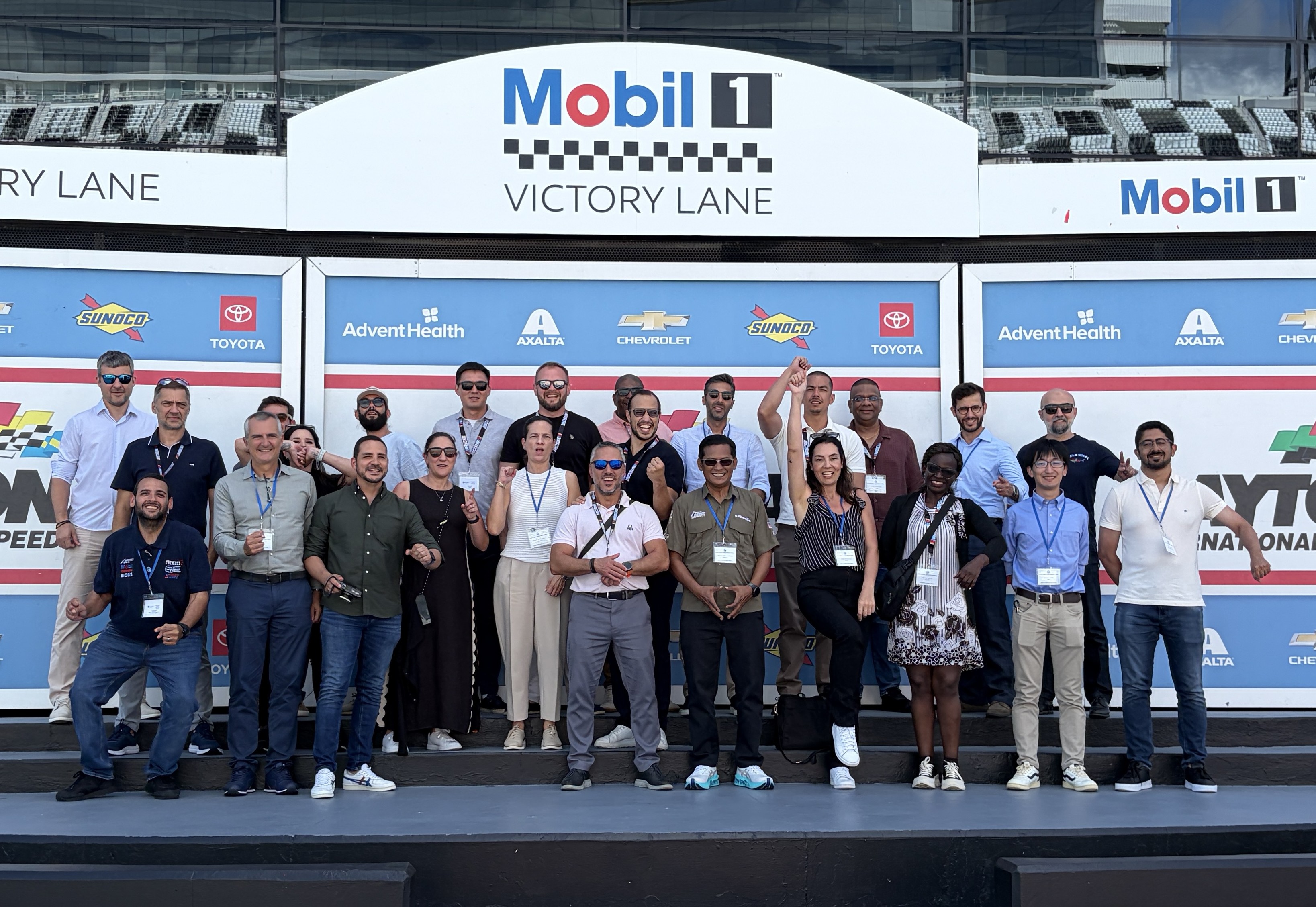
The first-of-its-kind IVLP welcomed 25 professionals from 25 countries, representing every continent except Antarctica, whose work spans the sports, tourism, automotive, engineering, and event-management sectors. The exchange gave them an inside look at an industry that has driven advances in American engineering, safety, manufacturing, and technology for more than a century — with influence extending far beyond the racetrack.
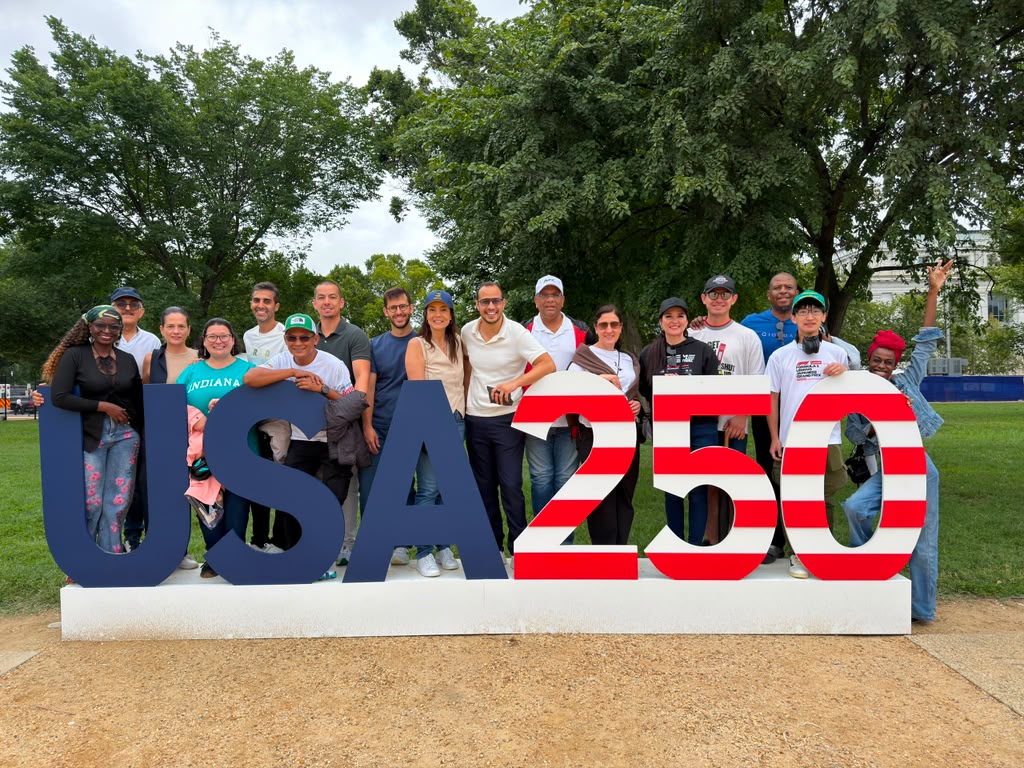
The exchange began in the nation’s capital, with the inaugural Freedom 250 Grand Prix of Washington, D.C. Held in celebration of America’s 250th anniversary, the event marked the first NTT INDYCAR SERIES race on the National Mall and offered participants a memorable introduction to the scale and energy of American motorsports.
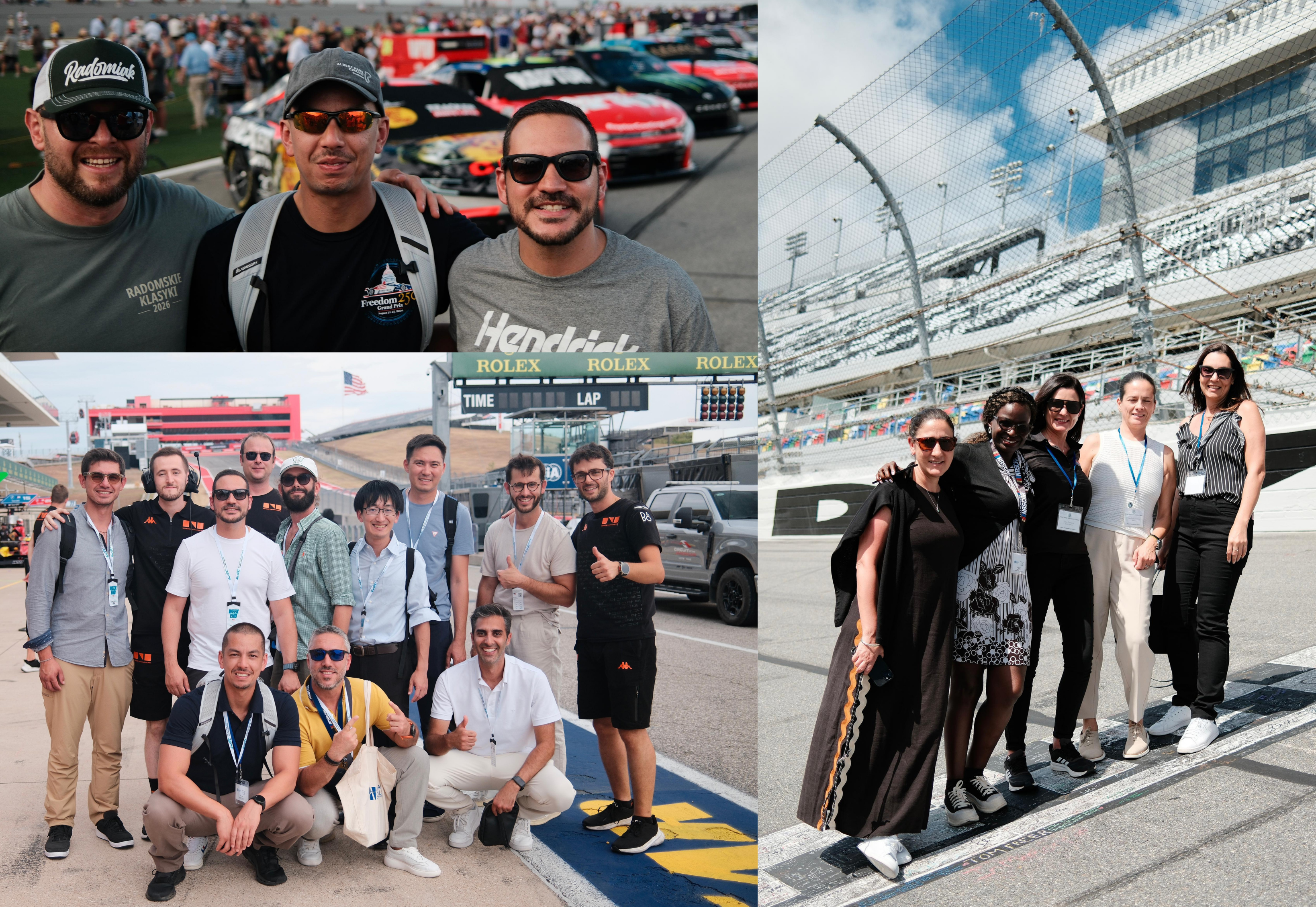
From Washington, participants traveled to Indianapolis, Charlotte, Daytona Beach, and Austin — four cities at the heart of the motorsports world. At each destination, they examined everything from vehicle engineering and workforce development to sponsorship, tourism, event security, and economic growth.
An Industry Driven by Innovation
In Washington, meetings with the U.S. Departments of State and Commerce framed motorsports as a global industry and a platform for economic engagement. Participants also learned how federal, state, and local authorities divide responsibilities, a framework they saw in action at the Grand Prix.
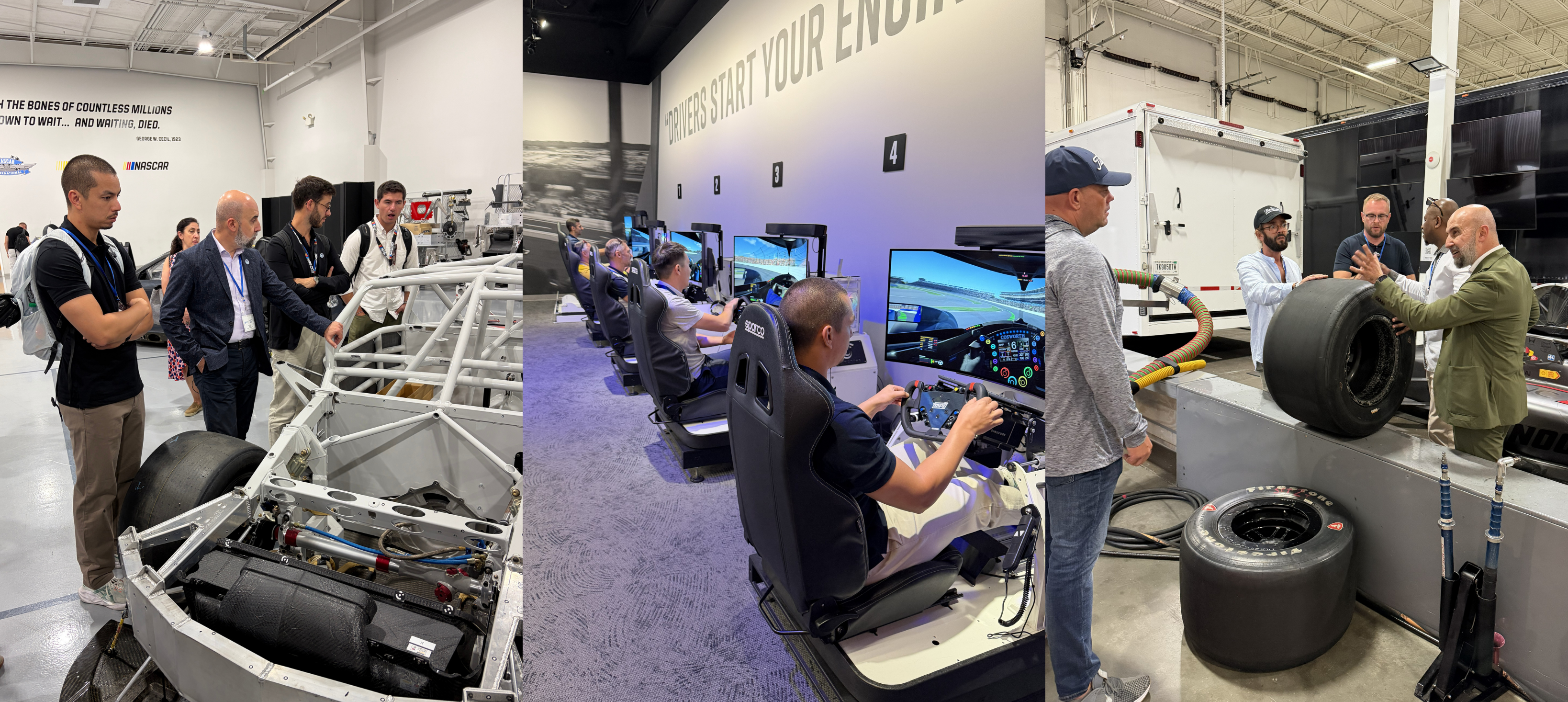
With that policy foundation, participants turned to the engineering and manufacturing operations that keep American motorsports moving. In Indianapolis, visits to Purdue University’s Motorsports Engineering Program, Dallara, Chip Ganassi Racing, Indianapolis Motor Speedway, and INDYCAR offered a closer look at how education, research, data, testing, and advanced manufacturing contribute to race-day performance.
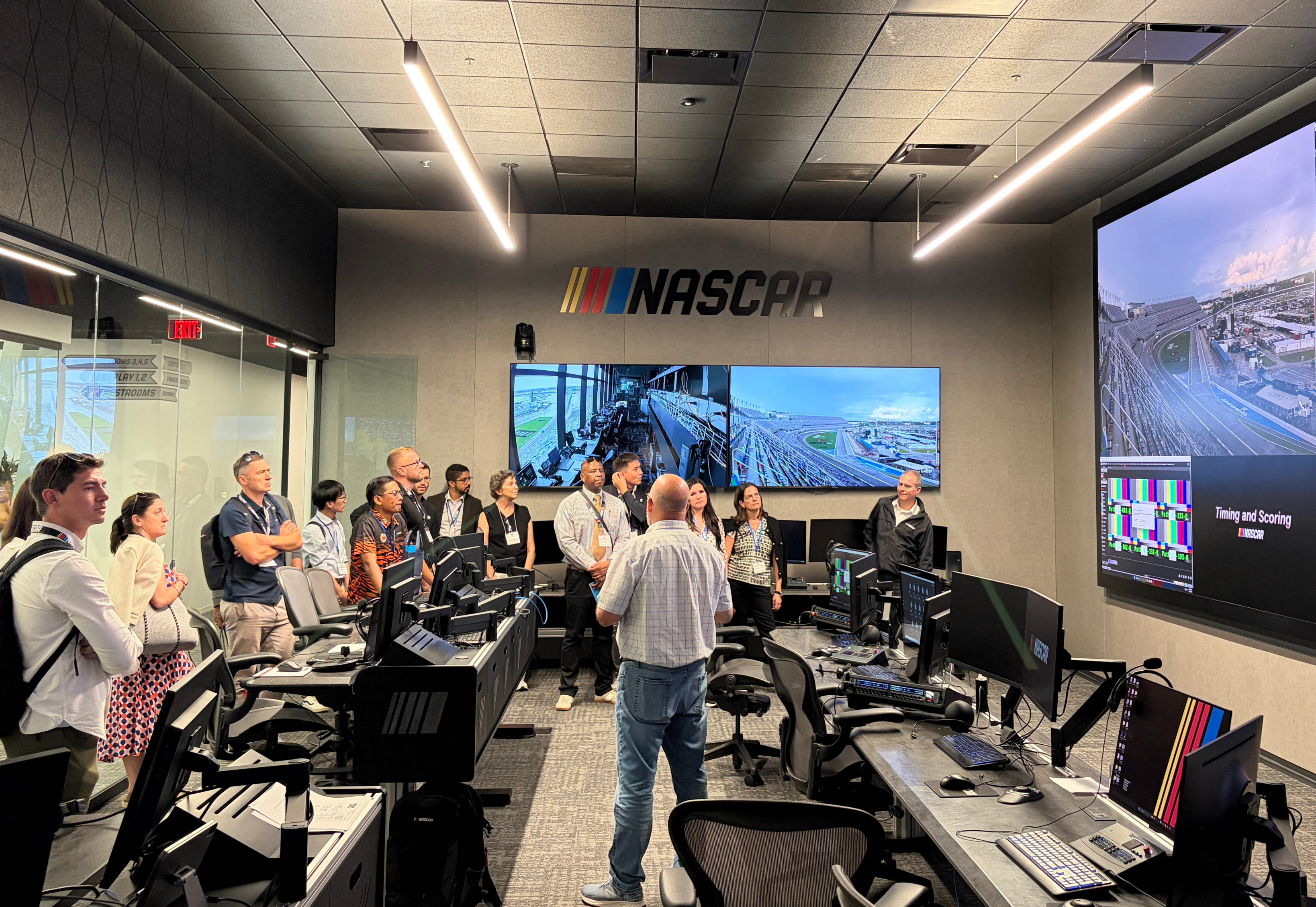
In Charlotte, the group continued that conversation at Hendrick Motorsports and NASCAR’s Research and Development and Production Centers. A roundtable gave NASCAR leadership and participants an opportunity to exchange industry knowledge and build connections that could support NASCAR’s international growth. Meetings with tire manufacturers also illustrated how racing serves as a proving ground for consumer technology, with advances in performance, materials, sensors, and safety informing products designed for everyday vehicles.
For Aziz Belouedhnine, a motorsports commentator and presenter from Tunisia, the visits highlighted how the different parts of the industry work together. He said:
What impressed me most was the American approach of treating motorsports as an interconnected industry, connecting competition, technology, media, business, and fan engagement. I’m working to adapt this model in Tunisia by building stronger partnerships and creating sustainable opportunities for the sport to grow beyond the racetrack.
Together, the visits made clear that motorsports rely on far more than drivers and race teams. The industry supports engineers, technicians, manufacturers, data analysts, media professionals, event specialists, and other highly skilled workers.
Motorsports as an Economic Engine
Throughout the program, participants also considered what happens around the racetrack: how races attract visitors, support businesses, generate tax revenue, and become part of a region’s long-term economic strategy.
Tourism and industry leaders in Charlotte explained how major events contribute to the local economy and create business value. At Daytona International Speedway, the group saw how an iconic racing venue can attract visitors year-round through concerts, vehicle testing, track rentals, and other activities.
The program concluded in Austin, where city officials and leaders from Circuit of the Americas discussed how private investment, public coordination, and state support helped transform formerly undeveloped land into a major destination for racing, entertainment, and tourism.
Participants also learned what it takes to plan and operate a major sporting event. Meetings with police, transportation officials, venue operators, and security professionals addressed crowd management, traffic control, emergency response, accessibility, and the division of responsibilities among public agencies and private operators. Attendance at major races in Washington, Daytona Beach, and Austin allowed participants to observe many of those systems in action.
For Tanya Thompson, CEO and Managing Director of Zwartkops Raceway in South Africa, the exchange offered ideas she could apply at home. She said:
What stood out to me was how American motorsports combine professional racing with entertainment, commercial partnerships, and community involvement. At Zwartkops Raceway and through the Extreme Festival, I want to build on this approach by creating more value for spectators, competitors and sponsors, while making motorsports more accessible to new audiences.
Taking Ideas Beyond the Track
Across all five cities, participants encountered different racing series, venues, business models, and regional economies. A consistent lesson emerged: American motorsports succeed through coordination among engineers, educators, manufacturers, racing organizations, businesses, tourism officials, first responders, and local governments.
By the IVLP’s conclusion, the group was already considering how connections made during the exchange — and the approaches they observed — could inform motorsports development in their own countries.
For Visar Gjikolli of Kosovo, the exchange's influence carried directly onto the racetrack. One day after returning home, he won the up-to-1600cc turbo class in an Auto Slalom competition, dedicated the victory to the IVLP group, and displayed the logos of the U.S. host organizations on his race car. "Racing forward — together, always!" he wrote.
The exchange also created opportunities for the American organizations that hosted the group. By connecting U.S. racing organizations, manufacturers, educators, tourism leaders, and public officials with professionals from all corners of the world, the program expanded the reach of American expertise and opened channels for future commercial collaboration. U.S. hosts also gained insight into emerging motorsports markets, the challenges their international counterparts face, and where American technologies, standards, and business approaches could be applied more broadly.
This IVLP demonstrated that motorsports are not only about what happens on the track. The industry provides a testing ground for new technologies, supports skilled jobs and advanced manufacturing, generates tourism and business activity, and offers a model for managing some of the world’s most complex sporting events.
The Racing Forward: American Innovation in Motorsports IVLP was sponsored by the U.S. Department of State and administered by American Councils for International Education, in partnership with The International Center (Indianapolis), International House (Charlotte), WorldOrlando (Daytona Beach), and GlobalTexas (Austin).